TL;DR
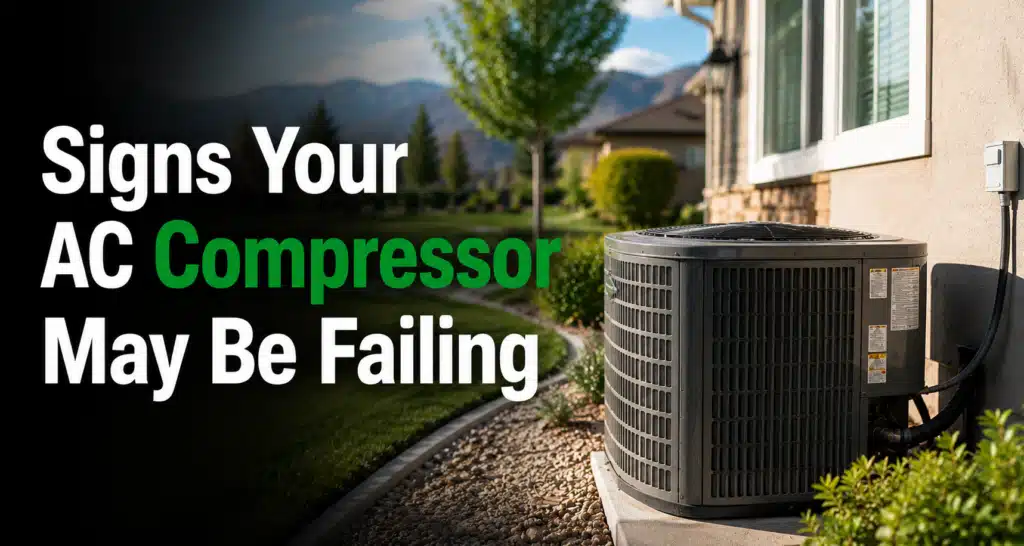
If your air conditioner is blowing warm air, making loud noises, struggling to cool your home, or repeatedly tripping the breaker, a failing compressor could be the cause. The compressor is the heart of your air conditioning system, but it usually gives warning signs before it fails completely. Catching those symptoms early may prevent additional damage and help you make an informed decision about repairing or replacing your system.
AC Compressor Failing: What to do
It usually starts with something small.
Maybe your home feels a little warmer than usual during the afternoon. Maybe the AC seems to run all day without ever reaching the temperature on the thermostat. At first, you assume it’s just another hot Utah day pushing the system harder than normal.
Then the cooling gets worse.
You hear a strange humming noise from the outdoor unit. The house takes longer to cool every evening. Your energy bill suddenly jumps, even though nothing else has changed.
One of the first questions homeowners ask us during a service call is:
“Do you think my compressor is going out?”
It’s a fair question. The compressor is one of the most important components in your air conditioning system. While compressor failures aren’t something we see every day, they are one of the most expensive repairs homeowners can face if problems are ignored for too long.
The good news is that compressors rarely fail without warning. Understanding the early symptoms can help you schedule an inspection before a small issue becomes a complete system failure.
What Does an AC Compressor Actually Do?
Think of the compressor as the heart of your air conditioning system.
Its job is to circulate refrigerant through the system by compressing it into a high-pressure gas. That refrigerant then releases heat outdoors before cycling back inside to absorb heat from your home.
Without a functioning compressor, your air conditioner simply can’t move heat outside. Even if the fan is running and the thermostat appears to be working normally, your home won’t cool properly.
If you’re unfamiliar with how your cooling system works, the U.S. Department of Energy’s guide to central air conditioners does an excellent job explaining the refrigeration cycle and why every major component depends on proper airflow and refrigerant movement.
As we discussed in our article about Why Your AC Isn’t Cooling Your House During Utah’s 100° Summer Days, compressor issues are only one possible cause of poor cooling performance. Dirty filters, frozen evaporator coils, refrigerant leaks, and electrical failures can all create similar symptoms, which is why professional diagnostics are so important.
1. Your Air Conditioner Is Blowing Warm Air
This is the symptom most homeowners notice first.
The thermostat is set correctly.
The indoor blower is running.
The outdoor unit appears to be on.
Yet the air coming from the vents simply isn’t cold.
A failing compressor may no longer be able to circulate refrigerant effectively, meaning your system is moving air without actually removing heat from your home.
Warm airflow doesn’t automatically mean the compressor has failed. We’ve diagnosed countless systems where the actual problem turned out to be:
- Low refrigerant from a leak
- Dirty condenser coils
- Failed capacitors
- Contactor issues
- Thermostat problems
That’s why we always recommend a full diagnostic instead of assuming the worst. Many homeowners are relieved to learn the compressor is still healthy and the repair is much simpler than expected.
If your system has stopped cooling completely, our Air Conditioning Repair service page explains what to expect during a professional diagnosis and repair visit.
2. The Outdoor Unit Is Making Unusual Noises
Air conditioners aren’t silent.
You’ll normally hear a steady hum from the compressor and the sound of the condenser fan moving air.
What you shouldn’t hear are:
- Metal grinding
- Loud buzzing
- Clanking
- Hard knocking
- Repeated clicking
- High-pitched squealing
Some noises originate from failing compressor bearings, while others may indicate internal damage or electrical problems preventing the compressor from starting correctly.
In many cases, what sounds like compressor failure actually turns out to be a bad capacitor or contactor, repairs that are far less expensive than replacing the compressor itself.
The longer unusual noises are ignored, the greater the chance additional components become damaged.
3. Your Circuit Breaker Keeps Tripping
Compressors require a significant amount of electricity to start and operate.
When a compressor begins failing internally, it often draws more amperage than normal.
Your electrical panel protects the system by shutting power off before overheating can occur.
If resetting the breaker becomes a regular occurrence, don’t continue flipping it back on.
Repeated breaker trips are often warning signs that something more serious is happening inside the system.
Electrical problems should always be diagnosed by a qualified HVAC technician.
4. Your Home Takes Hours to Cool
One of the most overlooked compressor symptoms isn’t complete failure.
It’s reduced performance.
Instead of cooling efficiently, the compressor slowly loses its ability to move refrigerant through the system.
You might notice:
- The house cools eventually, but much slower.
- The AC runs almost continuously.
- Bedrooms stay warmer than the rest of the house.
- The thermostat struggles to reach the set temperature.
During Utah’s hottest afternoons, even a partially weakened compressor can have trouble keeping up.
This gradual decline is why many homeowners don’t realize there’s a problem until temperatures reach the upper 90s or even exceed 100 degrees.
5. Your Energy Bills Suddenly Increase
If your cooling habits haven’t changed but your electric bill has, your air conditioner may be working much harder than necessary.
A compressor that isn’t operating efficiently forces the entire system to run longer cycles while producing less cooling.
According to ENERGY STAR, proper HVAC maintenance and efficient equipment can significantly reduce unnecessary energy consumption throughout the cooling season.
An increase in utility costs doesn’t automatically point to compressor failure, but it’s certainly one of the warning signs we investigate during summer service calls.
What We See Most Often
One thing we’ve noticed after servicing air conditioners throughout Salt Lake County and northern Utah County is that compressors rarely fail overnight.
More often, we see homeowners living with small symptoms for weeks or even months.
Maybe the AC started taking a little longer to cool.
Maybe it made a strange noise once in a while.
Maybe the energy bill slowly crept higher each month.
Because the system still “worked,” it was easy to postpone calling for service. By the time the compressor stopped completely, the repair options were often more limited.
Many compressor failures can be traced back to another issue that was left unresolved, such as a refrigerant leak, restricted airflow, or an electrical component that continued placing extra strain on the system.
Addressing those smaller problems early is one of the best ways to extend the life of your air conditioner.
6. The Compressor Won’t Turn On
Sometimes the indoor fan still runs, but the outdoor unit never fully starts.
You may hear a faint clicking sound followed by silence, or the system may hum for a few seconds before shutting itself back down.
While homeowners often assume this means the compressor has failed, that’s not always the case. Several components work together to start the compressor, including the capacitor, contactor, wiring, and safety controls. A problem with any one of these parts can prevent the compressor from starting even if it’s still in good condition.
This is one reason we always perform a complete system diagnosis before recommending a major repair. We’ve had many service calls where homeowners expected to replace the compressor, only to find that a much smaller electrical repair restored their air conditioner to normal operation.
What Causes an AC Compressor to Fail?
Compressors are built to last, often operating reliably for well over a decade. In most cases, they don’t fail because they’re poorly built. They fail because another issue places excessive stress on them over time.
Some of the most common causes include:
Low Refrigerant
A refrigerant leak forces the compressor to work harder than it was designed to. As refrigerant levels continue to drop, cooling performance suffers and internal temperatures rise.
If left unresolved, the additional strain can eventually lead to compressor failure.
If you’ve noticed your AC isn’t keeping up with the heat, our Air Conditioning Repair team can identify refrigerant leaks before they lead to more expensive repairs.
Dirty Condenser Coils
Your outdoor condenser is responsible for releasing the heat removed from your home.
Over time, dirt, grass clippings, cottonwood, and debris can coat the coils, restricting airflow and trapping heat inside the system.
That extra heat has to go somewhere, and the compressor is often the component that absorbs the additional workload.
The U.S. Department of Energy recommends keeping outdoor coils clean as part of routine HVAC maintenance because restricted airflow reduces efficiency and increases operating temperatures.
Electrical Problems
Compressors depend on several electrical components to operate correctly.
Failing capacitors, damaged contactors, loose wiring, voltage fluctuations, and worn relays can all create hard starts that repeatedly stress the compressor.
Sometimes replacing a relatively inexpensive electrical component prevents much larger repairs later.
Poor Maintenance
Annual maintenance isn’t just about cleaning filters.
During a professional tune-up, technicians inspect refrigerant pressures, electrical components, airflow, capacitors, coils, motors, and system performance before small issues become expensive failures.
Our HVAC Maintenance service is designed specifically to catch these problems before they shorten the life of your equipment.
Can You Keep Running Your AC?
This is one of the questions we hear most often.
Technically…
Sometimes.
Should you?
Usually not.
If the compressor is beginning to fail internally, continuing to operate the system can create additional damage throughout the refrigeration system.
For example:
- Metal debris can circulate through refrigerant lines.
- Motors may overheat.
- Electrical components can fail.
- The system may eventually stop cooling altogether during the hottest part of the summer.
If your air conditioner suddenly begins making loud noises, trips the breaker repeatedly, or stops producing cold air, it’s best to shut the system off and schedule an inspection rather than hoping it corrects itself.
Repair or Replace?
This is rarely a simple yes-or-no decision.
A compressor replacement can absolutely make sense under the right circumstances.
For example:
- Your system is under 10 years old.
- The equipment has otherwise been reliable.
- The remaining components are in good condition.
- The repair cost is reasonable compared to replacement.
However, replacement often becomes the smarter investment when:
- The system is 15 years or older.
- The compressor has experienced catastrophic internal failure.
- Refrigerant leaks are also present.
- Multiple major repairs have occurred recently.
- Efficiency has declined significantly.
If you’re already facing a major compressor repair, it’s often worth reviewing our Air Conditioning Installation and Air Conditioning Replacement services before making a final decision. Many homeowners are surprised to learn that newer high-efficiency systems can significantly reduce monthly cooling costs while providing more consistent comfort throughout the home.
We’ll always walk you through both options so you can make the decision that’s best for your home, budget, and long-term plans.
What About Compressor Replacement Costs?
Compressor replacement is one of the larger repairs homeowners may encounter, but the total investment varies considerably.
Factors that influence cost include:
- Equipment manufacturer
- Warranty coverage
- Refrigerant type
- System size
- Labor requirements
- Age of the equipment
- Whether additional components have also been damaged
In some situations, replacing the compressor is the most cost-effective option. In others, replacing the entire system provides better long-term value, especially when efficiency improvements and future repair costs are considered.
Rather than making recommendations over the phone, we believe every homeowner deserves an honest evaluation based on the condition of their specific system.
Homeowner Checks Before Scheduling Service
Before assuming the compressor has failed, there are a few simple things you can safely check yourself.
- Verify the thermostat is set to Cool and the temperature is below the current room temperature.
- Replace a dirty air filter if it hasn’t been changed recently.
- Make sure the outdoor condenser isn’t blocked by weeds, overgrown shrubs, or debris.
- Check that the breaker hasn’t tripped.
- Listen for unusual sounds from the outdoor unit.
If everything appears normal and your home still isn’t cooling properly, it’s time for a professional diagnosis.
Avoid opening electrical panels or attempting compressor repairs yourself. Air conditioning systems contain high-voltage electrical components and pressurized refrigerant that require specialized training and equipment.
Frequently Asked Questions
How long does an AC compressor usually last?
Most compressors last between 10 and 15 years, although lifespan depends heavily on maintenance, operating conditions, and overall system health.
Is a bad compressor always worth replacing?
Not necessarily. If the air conditioner is relatively new and otherwise in good condition, replacing the compressor may be a smart investment. Older systems with multiple issues often make better candidates for full replacement.
Can low refrigerant damage a compressor?
Yes. Refrigerant helps cool the compressor during operation. When refrigerant levels are too low because of a leak, the compressor can overheat and experience premature wear.
Will my AC still run with a bad compressor?
Sometimes the indoor blower will continue moving air even though the compressor isn’t cooling the refrigerant. This often results in warm air coming through the vents despite the system appearing to run.
Can compressor problems be prevented?
While no mechanical component lasts forever, annual maintenance, clean filters, proper refrigerant levels, and prompt repairs significantly reduce unnecessary stress on the compressor and help extend the life of your entire air conditioning system.
From the Green Line Team
Compressor failures can sound intimidating, but they aren’t something homeowners should try to diagnose on symptoms alone.
Over the years, we’ve responded to many service calls where customers feared the worst, only to discover the problem was a capacitor, contactor, thermostat issue, or another repair that was much simpler than expected. We’ve also seen the opposite, where delaying service allowed a small issue to develop into a major repair.
Our goal is never to sell you something you don’t need. We focus on identifying the actual cause of the problem, explaining your options clearly, and helping you choose the solution that makes the most sense for your home.
Whether your air conditioner needs a straightforward repair or it’s time to discuss replacement, we’ll give you honest recommendations backed by experience, not pressure.
What should you do next?
A failing compressor doesn’t always announce itself with a complete breakdown. More often, it starts with subtle warning signs like longer cooling cycles, unusual noises, rising energy bills, or warm air from the vents.
The sooner these symptoms are evaluated, the more options you’ll typically have.
If your air conditioner isn’t performing the way it should, the team at Green Line Plumbing, Heating & Air is here to help. We’ll diagnose the problem, explain exactly what’s happening, and recommend the most practical path forward so you can stay comfortable all summer long.